Up Breathing vs Down Breathing: Which One Helps in Labour?
By Mind & Bump Team
Up and down breathing are two gentle techniques often taught in hypnobirthing to help you feel calmer and more in control during labour.
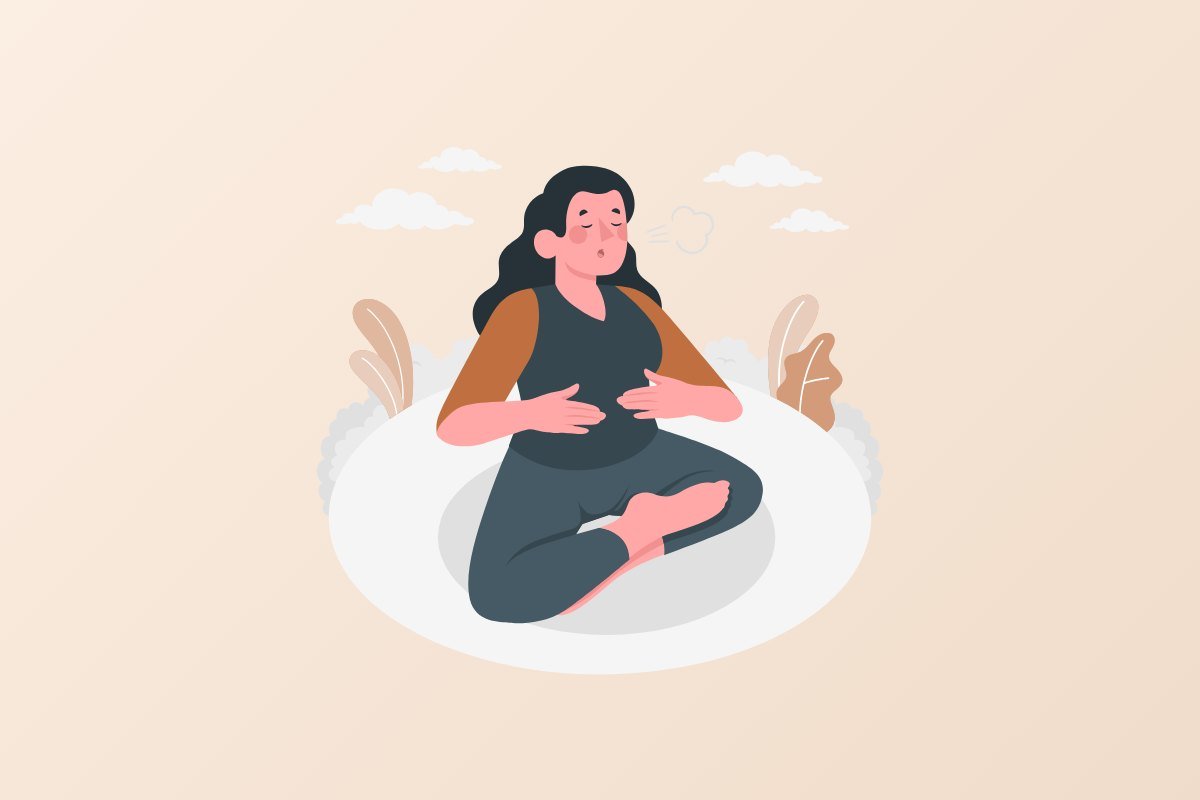
Breathing is something you do all day without a second thought, yet in labour, using it on purpose can become one of the steadiest tools you have. Up breathing and down breathing are two patterns commonly taught in hypnobirthing and positive birth courses, designed to match what your body is doing at each stage and help you feel calmer as you go through it.
Why Breathing Techniques Matter In Labour
When a contraction feels intense, the body's stress response tends to take over: muscles tighten, breathing turns fast and shallow, and thoughts race. That response can make contractions feel harder to manage and, when tension builds up, can even slow things down. Slow, deliberate breathing works against that cycle. It helps settle your heart rate, softens your muscles, and keeps oxygen flowing steadily to you and your baby.
Hypnobirthing often talks about the first stage of labour, when the cervix is opening, as the "up stage", and the second stage, when your baby is moving down and being born, as the "down stage". Up breathing and down breathing are matched to those stages, giving you a specific rhythm to reach for rather than having to invent one in the moment.
Up Breathing: The Pattern And When To Use It
Up breathing is used through the first stage, while your cervix is opening and each contraction is building and fading. A common version taught by hypnobirthing teachers goes like this:
- Breathe in through your nose for a count of four
- Breathe out through your mouth for a count of eight
- Return to normal breathing between contractions, then repeat the pattern as the next one builds
The key is that your out breath is longer than your in breath. A longer exhale signals safety to your nervous system and makes it less likely you will tip into fast, panicky breathing. Some people prefer slightly different counts, in for three and out for six, say, or in for five and out for seven. The exact numbers matter far less than keeping the exhale longer and smooth.
Many people pair up breathing with a simple image to hold onto, such as a wave rising and falling, a balloon slowly inflating and deflating, or a short phrase like "one breath at a time". You can also use up breathing well beyond contractions themselves, including while travelling to your place of birth, during examinations, or in the ordinary early moments of feeling anxious or overwhelmed.
Down Breathing: The Pattern And When To Use It
Down breathing, sometimes called birth breathing or J breathing, comes into play during the second stage, as your baby moves down through the pelvis. Rather than holding your breath and pushing hard, down breathing works with your body's own bearing-down reflex through steady, downward exhalations.
A simple version:
- Breathe in through your nose, imagining the air drawing down towards your abdomen
- Breathe out slowly through your mouth, directing the breath downwards, almost as though you are sighing your baby down
- Let your jaw and shoulders stay soft, rather than tensing your face or holding your breath
Some people picture a J shape, the breath travelling down and then slightly forward, which is where the name J breathing comes from. This feels quite different from the fixed "three pushes per contraction" pattern that older birth stories sometimes describe, and that is intentional: it is absolutely fine to ask your midwife to work with whatever breathing pattern you have chosen, where your labour allows it.
Practising Before Birth
These patterns feel far more natural in labour if they are already familiar by the time you get there. A few ways to build that familiarity in pregnancy:
- Daily micro-practice: pick one ordinary moment, waiting for the kettle, brushing your teeth, getting into bed, and run through four rounds of up breathing
- Evening relaxation: sit or lie comfortably, hand on your bump, and alternate a few rounds of up breathing with some slower down breaths, imagining your body working smoothly
- Walking practice: match your steps loosely to your breath, four steps in, eight steps out, on a short walk
You can also practise both patterns with a guided session in the Mind & Bump app, which leads you gently through the inhale and exhale counts so the rhythm becomes second nature well before your due date. If you attend antenatal or hypnobirthing classes, you will usually practise together with your group, which is a good chance for your birth partner to learn the counts alongside you. NCT's guide to getting started with hypnobirthing is a helpful place to look if you are deciding which kind of course would suit you.
How Your Birth Partner Can Help
Birth partners often want something concrete to do, and supporting your breathing gives them exactly that. In practice, this might mean:
- Counting quietly alongside you, matching whichever rhythm you have chosen
- Reminding you, in a calm voice, to breathe in through the nose and out through the mouth when things feel intense
- Offering short, steady encouragement, such as "stay with your breath, you are doing this"
- Dimming lights or reducing noise so you can focus without distraction
Partners who practise the counts with you in pregnancy tend to find it far easier to step into that role once labour actually starts, rather than trying to learn it under pressure.
Breathing Through Unexpected Changes
Labour rarely follows the script we imagine, and plans sometimes change quickly. In those moments, a familiar breathing pattern can work like a handrail. Up breathing can help while you wait for monitoring results, have a cannula sited, or take in new information that needs a moment to settle. Down breathing can help if you feel a strong urge to bear down and want to work with it, or if you are being guided to push in a more directed way and want to stay as relaxed as possible.
If your breathing starts to feel fast or shaky, it is fine to pause, soften your shoulders and jaw, and return to your count, even if it is not exact. Building confidence with your breath is not about mastering it perfectly or using it for every single contraction. Even a handful of calmer breaths can shift how a contraction or a difficult moment feels, drawing on the non-pharmacological comfort measures recommended in WHO intrapartum care guidelines. Think of up breathing and down breathing as tools that stay in your birth toolkit, always available, however your labour actually goes.
Carrying These Tools Beyond Birth
The same rhythm, a longer out breath than in breath, keeps its usefulness well after your baby arrives. Many parents lean on it while coping with after-pains or breastfeeding contractions, settling anxious thoughts during a long night feed, or steadying their nerves before a postnatal appointment. Once the pattern is familiar, it becomes something you can reach for in almost any stressful moment, not just labour itself.
Mind & Bump
Daily affirmation cards for every stage of pregnancy
Trimester-specific cards, audio narration, and a home screen widget.
You might also find helpful
Hypnobirthing Australia vs Calmbirth: Which Birth Course Is Right for You?
Hypnobirthing Australia's Positive Birth Program and Calmbirth are two of Australia's best-known childbirth education courses. Here is how they compare on content, format, and cost.
Best Hypnobirthing Apps for a Calmer Birth
Hypnobirthing apps put breathing techniques, relaxations, and positive affirmations in your pocket. This guide looks at the most popular options so you can find the tools that genuinely fit you.
NHS vs Private Antenatal Classes: NCT, Bump & Baby Club and HPHB Compared
NHS, NCT, Bump & Baby Club or Happy Parents Happy Baby? A friendly comparison of free and private antenatal classes to help you choose what fits your needs, budget, and circumstances.